How to Reduce the Energy Consumption of an Industrial Refrigeration Installation
Cutting industrial refrigeration energy use is not just about new compressors. Measure, fix, optimise and then invest: that is the order that works.
Ingeniería Isofred
Departamento Técnico - Isofred
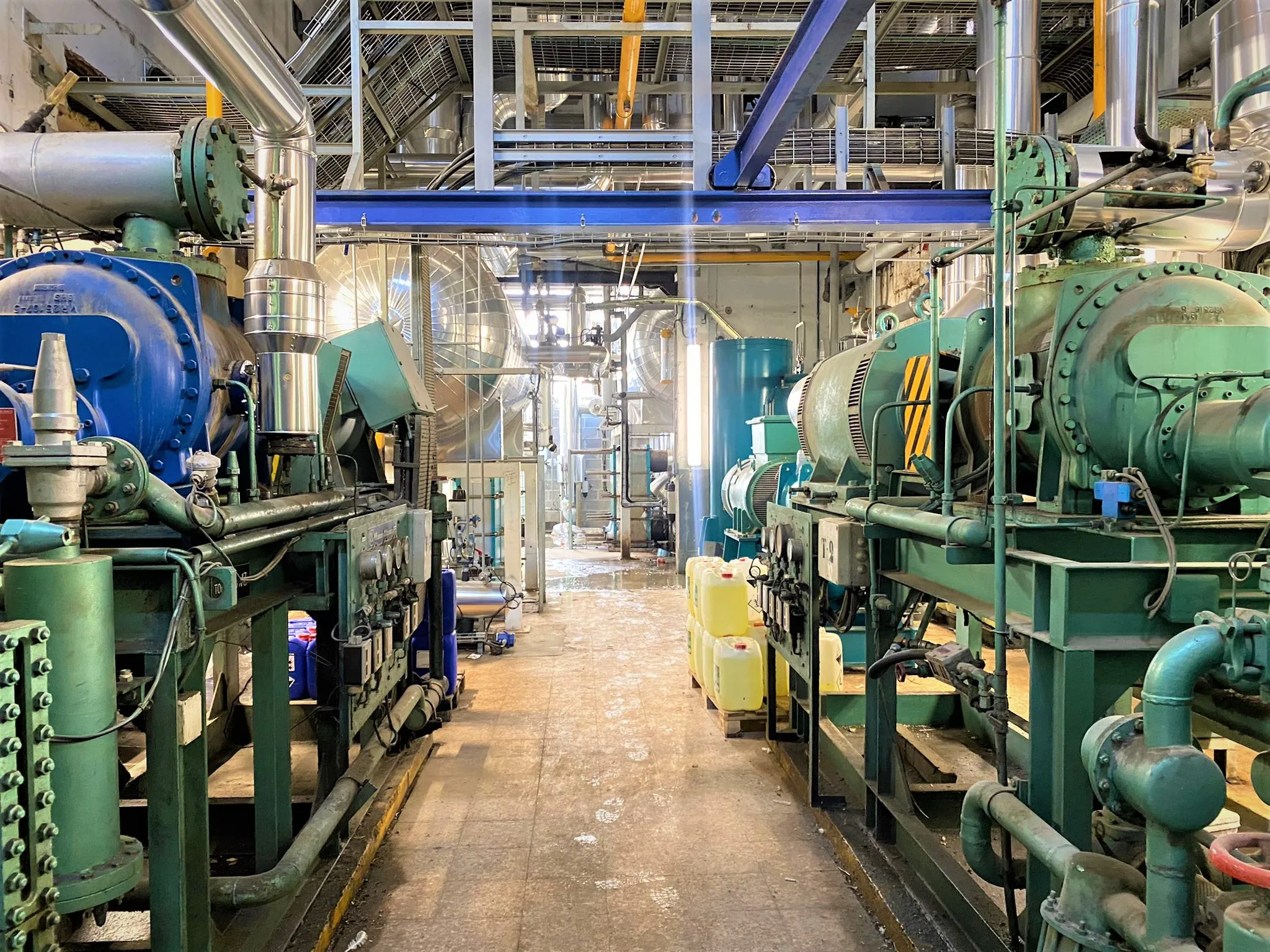
Cutting the energy use of a refrigeration installation is not about replacing compressors. It depends on the whole system: set points, product intake, doors, insulation, evaporators, condensers, defrosts, controls and maintenance.
The first opportunities are usually cheap: reviewing set points, cleaning heat exchangers, repairing doors, tuning defrosts and sequencing compressors properly. The Carbon Trust estimates that low- or no-cost measures can cut refrigeration costs by up to 20 %, although real savings depend on each installation.
Quick answer
Measure first. Then remove avoidable heat loads and run the installation at the highest evaporating and lowest condensing temperatures that the product and climate allow. Only then does it make sense to invest in drives, automation, heat recovery or new equipment.
Up to 20 %
Savings from low- or no-cost measures (Carbon Trust)
2–4 %
Less energy per +1 °C of set point, if the product allows
5–12 %
Indicative savings from lower discharge pressure (US DOE)
Where does a refrigeration installation use energy?
Most of it goes to the compressors, which lift the refrigerant from suction to discharge pressure: the bigger that gap, the harder they work. Next come evaporator and condenser fans, glycol or water pumps, defrost and door heaters, lighting and machinery room ventilation. That is why almost every efficiency measure aims at the same thing: raising the evaporating temperature and lowering the condensing temperature as far as the process and outdoor conditions allow.
Measure before you act
With only the whole factory's electricity bill, nothing can be improved reliably. Refrigeration consumption has to be separated and cross-checked with evaporating and condensing pressures, room and product temperatures, defrost hours, door openings, compressor run hours, production and outdoor temperature.
It also has to be related to activity, with indicators such as kWh per tonne, per pallet or per cubic metre refrigerated, or consumption during non-production hours. That is the only way to tell higher consumption due to higher output from a real loss of performance.
Can temperature set points be reviewed?
A room colder than it needs to be makes compressors work harder and increases ice and defrosting. According to the Carbon Trust, raising a room by 1 °C, where the product allows, cuts refrigeration energy by 2 % to 4 %; for frozen storage, moving from −25 °C to −20 °C can save around 10 % to 15 %. First check the product's maximum temperature, food safety, the warmest point of the room, swings during door openings and defrosts, probe accuracy and customer requirements.
Not too cold, not too warm
An unnecessarily low set point wastes energy; one that is too high puts the goods at risk. The right set point is validated by measuring the product, not the air.
High evaporating, low condensing
Evaporating. The lower it runs relative to the room, the more the compressor consumes. A large, clean, ice-free evaporator with good airflow transfers the same duty at a higher evaporating temperature. Avoid unnecessary superheat and never block air inlets and outlets with product.
Condensing. The condenser rejects all the installation's heat. If it is dirty, has damaged fins, faulty fans, hot-air recirculation or non-condensable gases, discharge pressure and consumption rise. Many older installations also keep condensing pressure fixed all year, as if it were always summer. Floating head pressure lowers it when the weather cools, while respecting valve feed, oil return and hot-gas defrost. The US Department of Energy puts this saving at 5 % to 12 % in certain installations.
Doors, infiltration and insulation
Every opening lets in warm, humid air that has to be cooled and dehumidified: more load, iced evaporators, more defrosts, condensation and fog. In busy rooms, infiltration can account for up to 30 % of the heat load. High-speed self-closing doors, alarms for doors left open, strip curtains, anterooms, refrigerated docks, good seals and well-planned logistics routes all reduce it. Be careful with air curtains: badly sized, they increase infiltration.
In insulation, the weak points are damaged panels, open joints, thermal bridges, broken vapour barriers, unsealed penetrations and poorly insulated suction lines. Frost or condensation on insulation is the warning sign: repairing it lowers the heat load and prevents corrosion and deterioration.
Demand defrost
Too little defrosting leaves ice that chokes the evaporator; too much wastes energy and puts heat into the room. The efficient approach is to start when a loss of performance is detected (via air pressure difference, coil temperature, actual run time or ice sensors) and stop as soon as the ice has gone, instead of fixed cycles. Often, optimising when the cycle starts and ends is enough, without changing the system:
| System | Advantage | What to control |
|---|---|---|
| Electric | Simple and common | Direct consumption and added heat |
| Hot gas | Uses discharge refrigerant | Control, liquid return and safety |
| Water | Very fast | Water management and refreezing risk |
| Air or off-cycle | Minimal consumption | Only at suitable temperatures |
| Warm glycol | Integrates with indirect systems | Pumping and heat source |
Compressors at part load and variable-speed drives
A plant spends most of the year at part load, and that is where a lot is won or lost. Several unloaded screw compressors running together can use more than one near full load with another trimming. Good sequencing prioritises the most efficient compressor, avoids starts and short cycling and uses the one with a drive for fine control. The US EPA puts the saving at 5 % to 15 % a year in certain systems.
Variable-speed drives save energy when the load varies, but only as part of the control strategy: on screw compressors they must be coordinated with the slide valve, checking minimum speed, lubrication, oil return, resonance and harmonics. On fans, EC motors, speed reduction and stopping fans during door openings cut consumption and added heat, always checking that no warm spots appear in the load.
Pumps, lighting and heaters
In glycol or water circuits, check actual flow, filters, balancing valves and pumps duplicated for no reason; excessive glycol concentration raises viscosity and pumping energy. LED lighting with presence sensors saves twice, because it also adds less heat to remove. And frame, drain and floor heaters are often left on permanently when they are only needed in certain conditions: controlling them by temperature or humidity cuts their consumption without causing ice.
Pre-cooling and heat recovery
A holding room is not designed to cool warm product: when it receives it, the plant runs longer and the rest of the load warms up. Separating pre-cooling (hydrocooling, forced-air tunnels, vacuum cooling or plate heat exchangers) from storage lets each process be designed for its job. And the heat the installation rejects outdoors can be recovered for cleaning water, hot water or space heating. Note: it does not always reduce the plant's electricity use; its benefit is usually saving gas or another energy source. It is especially attractive with transcritical CO₂ (see subcritical vs transcritical CO₂).
Maintenance, monitoring and production planning
Equipment can keep cooling while losing efficiency for months. A preventive maintenance plan covering heat exchanger cleaning, leaks, probe calibration, doors, insulation, defrosts and superheat prevents that silent overconsumption. Monitoring helps when it turns data into action: alarms for slowly rising condensing pressure, compressors running without demand, excessive defrosts, doors left open or abnormal night-time consumption. Organisation matters too: full rooms rather than several half-empty ones, coordinated defrosts, staggered peaks and, with solar PV, shifting loads to sunny hours without ever taking the product outside its limits.
Where to start?
| Stage | What to do |
|---|---|
| 1. Measure | Meters, temperatures, pressures, schedules and production |
| 2. Fix | Set points, doors, dirt, ice, leaks and insulation |
| 3. Optimise | Floating head pressure, sequencing and demand defrost |
| 4. Invest | Drives, heat exchangers, heat recovery or a new plant |
This order avoids replacing equipment before operational problems are fixed: a new plant will also overconsume if it has to make up for open doors, overcooled rooms or dirty condensers. If the underlying issue is the refrigerant, we cover it in natural refrigerant or HFC.
Isofred efficiency projects
Bon Àrea (Guissona, Lleida)
Retrofit of the two machinery rooms serving its slaughterhouses: optimised compressor units, higher productivity and major energy savings, adding 3,270 kW of cooling for a total of 10,000 kW.
Litera Meat (Binéfar, Huesca)
High-temperature ammonia heat pump (10,000 kW of cooling) producing 1,000 kW of heat at 65 °C for scalding and cleaning, cutting natural gas use and emissions.
Aeropic (Lleida)
Complete renovation of a poultry slaughterhouse with thermal energy at 85 °C obtained from heat recovered from the refrigeration plant itself, all managed by SCADA.
See more in our projects.
Which mistakes come up most often?
- Replacing compressors without measuring the system.
- Lowering the set point “to be safe” and keeping condensing pressure fixed all year.
- Installing drives without adjusting the control strategy.
- Scheduling too many defrosts or leaving heaters on all the time.
- Not cleaning condensers or calibrating probes.
- Comparing consumption without accounting for production.
- Adding up savings percentages from different measures as if they were independent.
Is your refrigeration installation using more energy than expected?
We carry out an energy audit of your industrial refrigeration: we measure, find the losses and propose a prioritised action plan.
Frequently asked questions
Which measure saves the most? It depends on the installation: in some it is the doors, in others high condensing pressure, set points that are too low or poor compressor sequencing. That is why you measure before investing.
Does raising the temperature by 1 °C reduce consumption? Generally yes, by 2 % to 4 % according to the Carbon Trust, but only if the product and process allow it.
Does a variable-speed drive always save energy? No. It saves when the load varies and it is properly integrated with the motor, the equipment and its control system.
Does heat recovery reduce refrigeration energy use? Not necessarily. Its main benefit is using heat that was being thrown away and saving the energy previously used to produce hot water or heating.
Is it better to replace an old plant? Only after comparing its condition, consumption, refrigerant and remaining life with the cost of a new one. Many improve significantly with adjustments and partial upgrades.
Technical note: savings percentages are references from energy guides; they do not add up and are not guaranteed. Results must be calculated from measurements and real data for each installation.