
Industrial refrigeration in Lleida: solutions for the agri-food sector
In Lleida, industrial refrigeration runs through harvest seasons and summers above 40 °C. Here is what each agri-food activity needs and how to design an installation that does not fail when it matters most.
Ingeniería Isofred
Departamento Técnico - Isofred
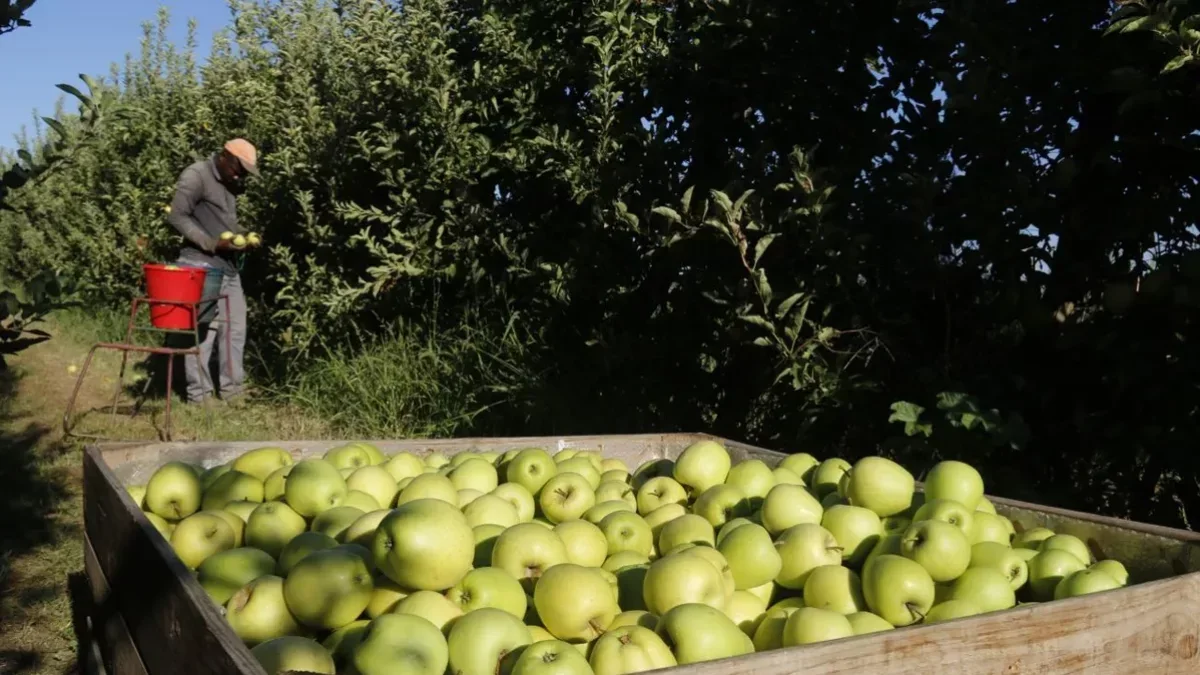
In Lleida, industrial refrigeration is part of the production chain. Fruit packhouses, cooperatives, slaughterhouses, cutting plants, warehouses, logistics platforms and food factories all depend on controlling temperature from the moment raw material arrives until the truck leaves.
And they do it in demanding conditions: harvest seasons when huge volumes come in within a few hours, right in the hottest months of the year. The Lleida–La Femosa weather station has recorded highs of up to 43 °C. An installation not designed for that works well most of the year and fails when it is needed most.
Quick answer
An industrial refrigeration installation in Lleida is designed around the product, the harvest season, real summer outdoor temperatures, operating hours and planned expansions. It must be ready for intake peaks, extreme heat and continuous operation at critical times, backed by a service team that can respond quickly.
43 °C
Highest recorded at Lleida–La Femosa
+28 → 0 °C
In under 24 h in stone-fruit packhouses
Up to 12 months
Fruit storage in controlled atmosphere
What does Lleida's agri-food sector need?
The applications are very different. A fruit packhouse needs to pre-cool and store produce through the season; a meat plant needs to chill carcasses, condition work rooms and keep cold rooms under strict hygiene. A storage room, a freezing tunnel, a cutting room and a controlled atmosphere room are not designed the same way:
| Activity | Typical needs |
|---|---|
| Fruit packhouses and cooperatives | Receiving, pre-cooling, storage, controlled atmosphere, ripening and dispatch |
| Slaughterhouses and cutting plants | Carcass chilling, offal rooms, conditioned work rooms and freezing |
| Processed meat, drying rooms and cheese | Staged temperature, humidity and airflow programmes |
| Industrial freezing | Batch, continuous, spiral or IQF tunnels and frozen stores |
| Logistics platforms and wholesalers | Multi-temperature zones, refrigerated docks and redundancy |
Fruit packhouses: pre-cool, then store
At the height of the season, a packhouse may receive hundreds of tonnes in a few hours, straight from the field. The goal is not just to cool: humidity, weight loss, respiration, ethylene and airflow all need controlling. That is why it pays to separate pre-cooling from storage: with hydrocooling, forced-air tunnels or vacuum cooling, produce reaches its temperature sooner, the load on storage rooms drops, pallet-to-pallet differences shrink and produce already in store is not warmed up.
For long-term storage of apples, pears or stone fruit, controlled atmosphere also regulates oxygen, CO₂ and ethylene to slow respiration. It requires airtight rooms, gas equipment and strict entry procedures, and Spain's RSIF always classifies these installations as level 2, whatever the room volume.
Meat processing, drying rooms and freezing
Slaughterhouses, cutting plants and meat factories have to match refrigeration to production pace and hygiene: carcass chilling, offal rooms, conditioned cutting rooms, processed products, minced meat, freezing tunnels and refrigerated docks. What matters is not room temperature but how the product's temperature evolves, plus humidity, airflow and weight loss (see refrigeration for slaughterhouses and cutting plants).
Drying rooms for cured meats and cheese go further: they do not just store, they transform, with programmes combining cooling, heating, humidification, dehumidification and fresh air; if air is unevenly distributed, some pieces over-dry while others stay damp. And in freezing, a tunnel built to remove heat fast must not be confused with a room that stores already-frozen goods.
Lleida's heat and the refrigeration plant
As outdoor temperature rises, the condenser has less margin to reject heat: discharge pressure rises, consumption increases, cooling capacity falls, compressors suffer and high-pressure alarms appear. If seasonal peaks coincide with a heatwave, the safety margin disappears.
Design for the real summer
The outdoor design temperature must reflect the site on its worst days, not an average. An undersized condenser works fine for ten months and loses capacity exactly when the plant needs it most.
In Lleida, dirt also matters: dust, pollen and agricultural particles quickly coat coils and choke airflow. Condensers need generous surface area, a position free of hot-air recirculation, access for cleaning, the option of adiabatic cooling and a cleaning schedule adapted to the surroundings, more frequent during the season.
Sizing for the season
Many businesses go from low refrigeration demand to their peak in a matter of days. The design needs the maximum daily tonnage, kilos per hour, maximum intake temperature, intake schedule, time available for cooling, simultaneity between rooms and planned expansions.
Neither the average nor just the peak
Sizing for the annual average leaves the plant short in season; sizing only for the extreme peak makes it inefficient the rest of the year. The answer is usually staged compressors, good part-load control with variable-speed drives and a clear strategy for low-production months.
Which refrigerant and system fit?
| Technology | Where it fits |
|---|---|
| Ammonia (NH₃) | Large industrial installations and continuous processes |
| Subcritical CO₂ | Freezing and cascade systems |
| Transcritical CO₂ | Multi-temperature centres and heat recovery |
| Glycol water | Indirect distribution, with refrigerant confined to the machinery room |
| Propane (R290) | Packaged units and chillers with limited charge |
| A2L and low-GWP HFCs | Specific applications, after safety and regulatory review |
In large agri-food plants in the area, a common architecture is ammonia confined to the machinery room, glycol for positive temperatures and CO₂ for freezing. Glycol keeps the refrigerant out of occupied areas and makes it easy to serve many loads, at the cost of pumping energy and an extra temperature difference (and with the right concentration: more glycol than needed worsens heat transfer). We compare the options in subcritical vs transcritical CO₂ and natural refrigerant or HFC.
Efficiency, heat recovery and solar
In plants running thousands of hours a year, every efficiency point counts: evaporating as high as possible, floating head pressure, clean condensers, doors and seals in good condition, tuned defrosts, well-sequenced compressors and variable-speed drives (detailed in how to reduce the energy use of a refrigeration installation). Heat the plant rejects outdoors can be recovered for cleaning water, hot water or space heating, and makes more sense the more that demand coincides with cooling. Solar PV also matches the summer cooling peak well: scheduled pre-cooling, storage in glycol or chilled water and defrosts during sunny hours, always without taking the product outside its limits.
Before expanding, recalculate
Many installations grow in stages: one more room, a new line, a tunnel. Before expanding, check compressors, condensers, receivers, pumps, pipe sizes, the electrical panel, the transformer, controls, backup capacity and the RSIF classification. A plant that reaches temperature in winter is no proof it can handle the expansion on an August day at full production.
Season preparation and local maintenance
When an installation runs in season, response time decides whether a minor incident stays minor or turns into a shutdown with lost goods. The relationship with the service team should not start with a breakdown:
Pre-season check
Cleaning condensers and evaporators, compressors and oil, leaks, alarms, probes, doors, defrosts, pumps, panels, detectors, backup power, the statutory logbook and critical spares. And test the plant before filling it: spotting lost capacity with empty rooms is far cheaper.
Remote monitoring
Temperatures, pressures, humidity, compressors, energy, doors, defrosts and time outside set point, with prioritised alarms and delays: a system that beeps all the time ends up ignored.
Contingency plan
Who receives and confirms the alarm, when the service team is called, which doors stay shut, which product takes priority, where it moves to and who authorises the return to normal. The goal is to protect the product and the business, not just fix the machine.
RSIF and regulatory compliance
Installations must comply with Spain's RSIF (Royal Decree 552/2019) in design, installation, commissioning, maintenance, modification and inspection. An expansion, refrigerant change or significant upgrade may require updated documentation and notifying the change; do not wait for an inspection to find out whether the real installation matches the registered one. The level is set by several criteria together, never by one unit's capacity alone:
| Criterion | Level 1 | Level 2 |
|---|---|---|
| Capacity per system | Up to 30 kW | Over 30 kW |
| Total capacity | Up to 100 kW | Over 100 kW |
| Refrigerant | L1 | L2 or L3 |
| Artificial atmosphere | No | Yes |
| Technical document | Technical report | Design project |
Isofred: industrial refrigeration from Alcoletge
We work from Alcoletge, in the Segrià area, as a Category I refrigeration company under Royal Decree 552/2019. Some of the projects we have delivered in the region:
PAC Aitona (Aitona)
Stone-fruit packhouse in the Segrià: 10 storage rooms, 1,550 kW, 50 t/day, plus receiving, dispatch and pre-cooling rooms. Cools from +28 °C to 0 °C in under 24 hours with ammonia and its own SCADA.
Piñana / Conjuntfruit (Torrefarrera)
32 controlled atmosphere rooms in 23,879 m³ of refrigerated space, with its own SCADA and fruit storage for up to 12 months.
Baró e Hijos (Albatàrrec and Sudanell)
Two stone-fruit packhouses (17,000 t/year) with controlled atmosphere, rapid-cooling tunnels and automated ripening rooms.
Bon Àrea (Guissona)
Retrofit of the machinery rooms serving its slaughterhouses: +3,270 kW of cooling, up to 10,000 kW in total, with major energy savings.
See more in our projects, refrigeration for fruit and vegetables and refrigeration for the meat industry.
Which mistakes come up most often?
- Sizing for average production rather than the season.
- Ignoring Lleida's summer temperatures.
- Using a storage room to cool warm produce.
- Installing condensers without cleaning access, or without allowing for dust, pollen and recirculation.
- Expanding without recalculating the plant or updating its registration.
- One set point for different goods, or measuring air but not product.
- Relying on a single compressor, with no critical spares or power-cut plan.
- Not preparing the installation before the season.
What data do we need for a proposal?
Your activity and product, tonnes per hour and per day, entry and final temperatures, available time, season months and working hours, current rooms and capacity, refrigerant and age of the installation, power consumption, planned expansions and any freezing or hot-water needs. On a site visit we also check airflow, insulation, doors, condenser locations and the real scope for expansion.
Planning to install, expand or improve refrigeration at your Lleida site?
We visit your facilities, review how they operate and propose solutions for your season, your product and your climate.
Frequently asked questions
Which businesses need industrial refrigeration in Lleida? Mainly fruit packhouses, cooperatives, warehouses, slaughterhouses, cutting plants, meat processors, food factories, wineries and logistics platforms.
Why does climate matter so much? Because outdoor heat increases condenser load and reduces cooling capacity. Lleida has exceeded 40 °C, and that scenario has to be in the design.
When should the installation be checked? It should be maintained all year, but a full check before the season or a peak production period is highly recommended.
Can an existing plant be expanded? Often yes, but first check compressors, condensers, pipework, receivers, pumps, electrical capacity and the regulatory classification.
Does an expansion need to be registered? Significant expansions and modifications may require updating the design or technical report, issuing certificates and notifying the authority under the RSIF.
Technical note: this content is for information only. Solutions, capacities, refrigerants and regulatory obligations are determined by studying each installation and its specific activity.